LLM Consulting for SMBs
Identify where LLMs actually belong in the business before you build anything.
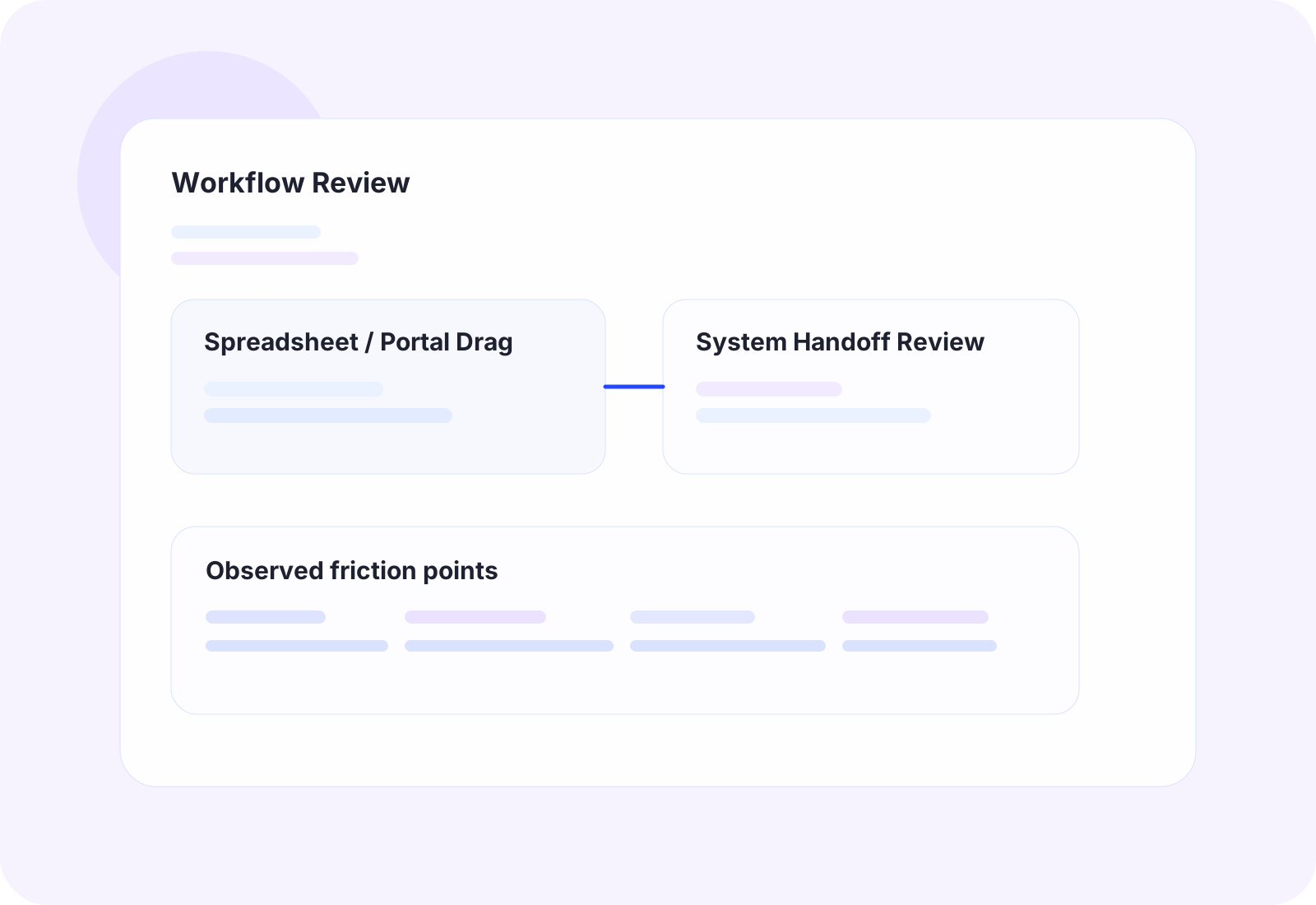
OfficeWeave helps leadership and operations teams evaluate where LLMs fit, where they do not, and what implementation path makes sense. That includes reviewing the actual office workflow in detail, identifying where language-heavy work can be reduced, and deciding whether the answer is public tooling, a controlled internal workflow, a custom application, or no LLM at all.
Paid discovery starts at $2,500 and is credited toward implementation.
Best fit for
Best for businesses that want a serious AI evaluation grounded in operations instead of generic prompts and trend-chasing.
OfficeWeave looks at the real sequence of work, then reduces the number of steps needed to complete it.
Leadership wants a realistic AI roadmap tied to real office work
You need help deciding between ChatGPT usage, private workflows, or custom build work
Employees are already experimenting and you need clearer boundaries
The business wants value from LLMs without creating unnecessary risk
Outcome
Find the highest-value AI use cases before spending on build work.
Where this service usually pays off.
Too much AI noise
Business owners hear constant promises about AI but still do not know which workflows deserve attention first or what good implementation looks like.
No workflow-level evaluation
LLM adoption decisions often happen without understanding the actual office process, the data involved, and the risks tied to it.
Unclear security and governance
Without rules, teams start using public tools inconsistently and leadership loses visibility into what information is moving where.
Practical implementation tied to the workflow itself.
The work starts by reviewing how tasks move through the office in detail, then choosing the cleanest technical approach for that process.
Detailed workflow review to identify where LLMs can reduce manual language-heavy work
Recommendations on where to use public tools, controlled internal flows, or custom implementation
Security and governance guidance for prompt usage, document handling, and data boundaries
Prioritized rollout paths that match real business constraints and expected payoff
The business outcome should be operationally obvious.
Reduce wasted spend on low-value AI experiments
Identify the LLM use cases that actually fit the business
Create a clearer path from exploration to implementation
Adopt AI in a more controlled and operationally useful way
Tools and platforms we use when the workflow calls for them.
OfficeWeave is not committed to one implementation pattern. The right answer may be UiPath, OCR, AWS services, Azure services, Supabase-backed data flow, custom bots, scrapers, secure LLM workflows, or focused internal tooling depending on what the process actually requires.
How this work typically moves from manual friction to cleaner throughput.
These are representative flow patterns, not rigid templates. The exact implementation depends on the client's systems, data, and operational constraints.
Workflow-level LLM fit review
Current state
6
manual steps in the representative workflow
Leadership knows the team is hearing about tools like ChatGPT, but there is no clear understanding of where LLMs belong in the actual workflow.
Future state
3
cleaner steps after redesign and automation
AI decisions are grounded in workflow reality instead of hype or internal guessing.
OfficeWeave flow
3 implementation stages
Controlled adoption path
Current state
7
manual steps in the representative workflow
Employees are experimenting informally with AI tools, but the business has no common rules or rollout plan.
Future state
3
cleaner steps after redesign and automation
The business gets a clearer AI roadmap with lower risk and less wasted experimentation.
OfficeWeave flow
3 implementation stages
Typical ways this service shows up in an engagement.
LLM opportunity audit
Review the business process in detail and identify which tasks are genuinely language-heavy enough to justify LLM support.
Adoption guardrails
Define where public tools are acceptable, where they are not, and what safer alternatives should exist for sensitive work.
Implementation roadmap
Translate vague interest in AI into a concrete build sequence tied to workflow value, risk, and implementation effort.
Adjacent work that often gets bundled into the same engagement.
Custom LLM Development
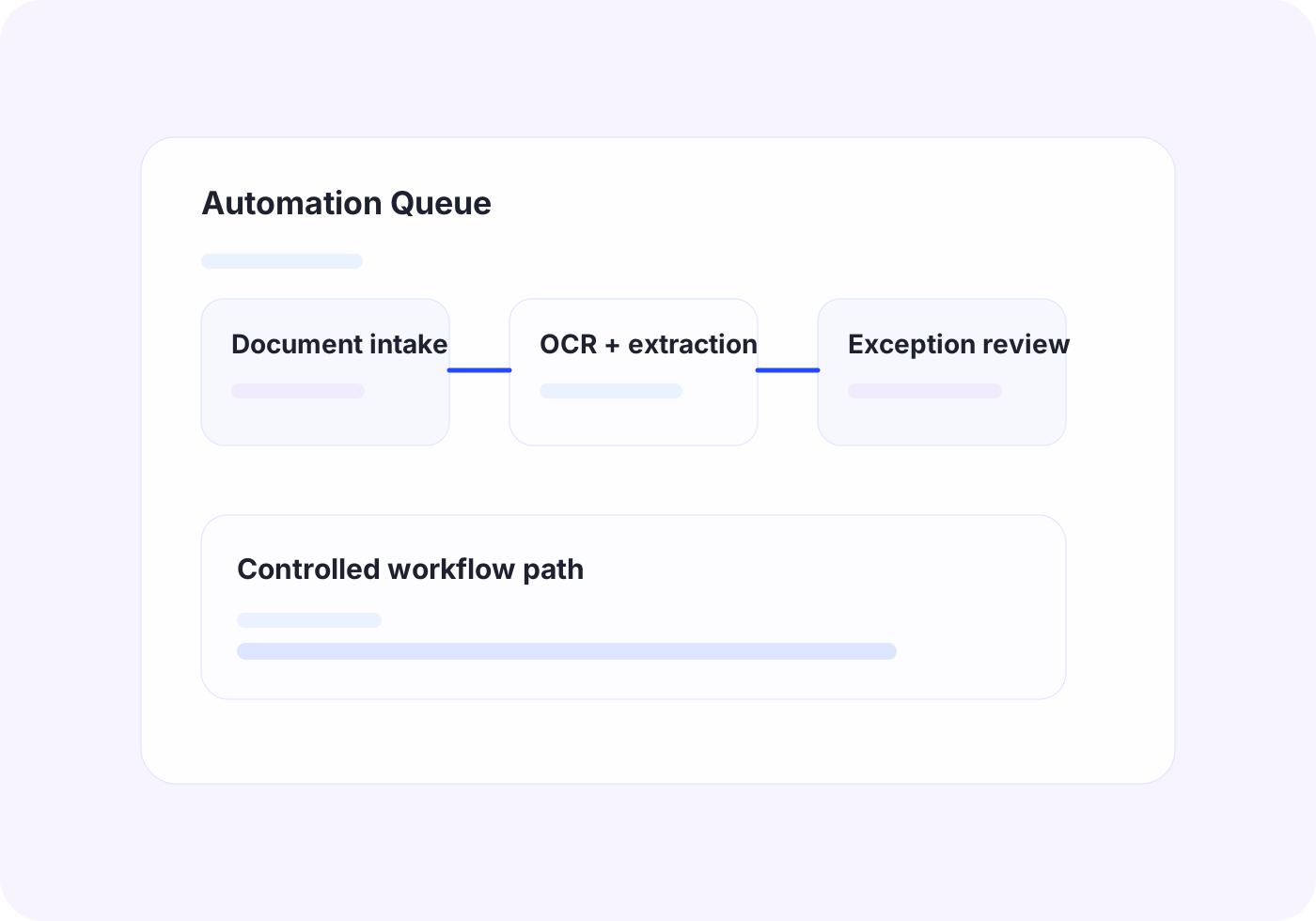
Deploy controlled LLM workflows for retrieval, drafting, extraction, and document-heavy process work with tighter security and review boundaries.
View related service
AI and Machine Learning
Turn messy operational data into usable classification, routing, prioritization, and decision support instead of forcing staff to sort it by hand.
View related serviceNext Step
If this looks close to the kind of operational drag your team is dealing with, the right next step is usually paid discovery. That lets OfficeWeave review the workflow in detail and recommend the cleanest implementation path.
Starting engagement
$2,500
Discovery is credited toward implementation when the project moves forward.
Book a Strategy Call